Gluten Free Starbucks: Drinks, Food, Menu Options & Ordering Guide

Finding gluten free Starbucks options isn’t as simple as picking a black coffee and calling it done. Once you start customizing — milk, syrup, sauce, cold foam, a pastry on the side — you’re evaluating a lot more than the base drink. And because Starbucks operates with shared equipment across nearly every store, “doesn’t contain gluten ingredients” and “guaranteed safe for celiac disease” are two very different things.
This guide walks through what’s actually gluten free at Starbucks, what commonly trips people up, and how to order in a way that matches your specific level of caution — whether you’re mildly gluten-sensitive or managing celiac disease. It covers drinks, food, milk alternatives, syrups and toppings, cross-contact, and a practical step-by-step approach to ordering. Menus, recipes, and ingredient sourcing change over time and vary by location and country, so treat this as a starting framework — not a substitute for checking current, store-specific information before you order.
Is Starbucks Gluten Free?

Quick answer: No single Starbucks location or menu is certified gluten-free. Many drinks and some food items don’t list gluten-containing ingredients, and Starbucks publishes ingredient information for its products, but the company is explicit that it cannot guarantee any handcrafted beverage or unpackaged food item is free of allergens — including gluten — because everything moves through shared equipment.
A few things to keep in mind before you order:
- Some drinks and ingredients don’t contain gluten-based ingredients as formulated.
- That’s different from being labeled or marketed as “gluten-free” — Starbucks doesn’t maintain an official gluten-free menu.
- Menu items, recipes, and sourcing can vary by market and change over time.
- Shared blenders, shakers, pitchers, and prep surfaces mean cross-contact is a real possibility, even for a drink whose ingredients don’t include gluten.
- Anyone with celiac disease or a diagnosed gluten-related condition should check current official allergen information and talk to Starbucks staff directly about how their order is prepared, rather than relying solely on ingredient lists.
Gluten-Free Starbucks Options at a Glance
| Category | Example Option | Gluten Consideration | Customization Risk | What to Check |
|---|---|---|---|---|
| Brewed coffee | Pike Place Roast, cold brew | Generally no gluten ingredients | Low if ordered plain | Milk/syrup add-ins |
| Espresso drinks | Americano, latte, cappuccino | Base espresso and milk are typically free of gluten ingredients | Rises with each syrup/sauce/topping | Current syrup and sauce ingredients |
| Iced coffee & cold brew | Iced coffee, cold brew, nitro | Generally no gluten ingredients | Low if unflavored | Sweeteners, cold foam |
| Tea | Brewed hot or iced tea | Generally no gluten ingredients | Rises with flavored syrups | Tea bag ingredients, add-ins |
| Frappuccino-style blended drinks | Coffee or caramel Frappuccino | Base varies; some inclusions (like cookie or cake pieces) contain wheat | High — toppings and mix-ins are common culprits | Specific topping/inclusion ingredients |
| Packaged snacks | Select protein boxes, packaged bars | Some are labeled gluten-free on the package | Low — check the printed label | Packaging allergen statement |
| Bakery case items | Croissants, muffins, cookies | Most contain wheat | N/A — assume unsafe unless labeled otherwise | Don’t assume any case pastry is gluten-free |
This table is a starting reference, not a guarantee. Specific products, formulations, and availability change, so cross-check anything you’re relying on against current allergen information from Starbucks before ordering — particularly if you have celiac disease.
What Is Gluten?
Gluten is a group of proteins found in wheat, barley, and rye (and in products derived from them, like malt). It’s what gives bread and baked goods their structure and chew, which is why gluten shows up most obviously in bakery items — but it also hides in less obvious places: sauces, flavored syrups, seasoning blends, malt-based ingredients, and some processed toppings.
That’s the core challenge for anyone eating gluten free at Starbucks: coffee itself is naturally gluten-free, but the moment you add a flavored syrup, a sauce, a crumble topping, or a pastry, you’re introducing ingredients that may not be. Checking the drink alone isn’t enough — you have to check what’s going into it.
What Does “Gluten Free” Mean at Starbucks?
It helps to separate three different situations, because guides (and baristas) sometimes blur them together.
Naturally gluten-free ingredients. Plain brewed coffee, espresso, and many teas don’t use gluten-containing ingredients in their base recipe. This is about formulation, not certification.
Products specifically identified as gluten-free. A small number of packaged items — some snack bars, select packaged bakery items like the Marshmallow Dream Bar in certain markets — carry a gluten-free label on the packaging itself. These are the closest thing Starbucks offers to a verified gluten-free claim, and even then, availability varies by store.
Products that may appear gluten-free but require caution. This is the largest and trickiest category. A latte with no obvious gluten ingredients can still pick up trace gluten from a shared steaming pitcher or a shaker also used for a wheat-based inclusion. A syrup can change formulation without much public notice. This is where “no gluten listed” and “safe for celiac disease” genuinely diverge.
Gluten-Free Starbucks Drinks
Gluten-Free Coffee
Brewed coffee, drip coffee, Americano, iced coffee, and cold brew are the most straightforward starting points — the base beverage itself doesn’t rely on gluten-containing ingredients. Where it gets more complicated is everything you add on top: flavored syrups, sweet cream, sauces, and toppings each need their own check, since a coffee that’s gluten-free black can pick up gluten-containing ingredients the moment you customize it.
Gluten-Free Starbucks Espresso Drinks
Espresso, Americanos, lattes, cappuccinos, and flat white–style drinks are typically built from espresso and milk — neither of which contains gluten as a base ingredient. That said, don’t extend that logic automatically to every flavored version of these drinks. A vanilla latte and a plain latte share a base, but the vanilla syrup is a separate ingredient with its own formulation that needs to be checked independently, especially if you’re ordering a less common or seasonal flavor. Here read about example Iced Caffe latte.
Gluten-Free Iced Drinks
Iced coffee, cold brew, nitro cold brew, and unflavored iced espresso drinks generally follow the same logic as their hot counterparts — the base is typically free of gluten ingredients. Refresher-style drinks (fruit-juice based, not coffee) also tend to avoid gluten ingredients in their base, but as with anything customized, added syrups, sweeteners, or cold foam should be checked separately rather than assumed safe.
Gluten-Free Tea
Brewed hot and iced tea are usually straightforward, since tea leaves themselves don’t contain gluten. Flavored tea drinks and tea lattes introduce the same variable as flavored coffee drinks: the base tea may be fine, but a syrup, sauce, or sweetened base added to it needs its own check. If you’re ordering a seasonal or specialty tea drink, that’s exactly the kind of product where formulations are more likely to have changed recently.
Gluten-Free Starbucks Food
Food is where gluten free Starbucks searches get trickier, because the bakery case is built almost entirely around wheat.
Breakfast
Traditional Starbucks breakfast sandwiches — built on English muffins, bagels, or artisan bread — are not gluten-free; the bread itself is the issue. Sous Vide Egg Bites are a more promising category for some customers, since several varieties don’t rely on wheat-based ingredients, though variety matters: some egg bite flavors include ingredients like sausage that may themselves contain gluten-based fillers or seasonings. Oatmeal is a common assumption people make, but it’s worth being cautious here — oats are naturally gluten-free as a grain, but commercially grown and processed oats (including the ones most large chains use) are frequently cross-contaminated with wheat during farming and processing unless specifically sourced as gluten-free oats. Don’t assume Starbucks oatmeal is celiac-safe without checking current sourcing.
Snacks
Packaged snacks are generally the most reliable category for gluten-free food at Starbucks, because they carry manufacturer labeling you can check directly rather than relying on in-store ingredient sheets. Some protein boxes, packaged bars, and similar grab-and-go items are labeled gluten-free on the package. Always read the actual label in front of you rather than relying on a list from an article, since packaged product lineups shift.
Bakery
Be direct with yourself here: the vast majority of the Starbucks bakery case — croissants, muffins, scones, cookies, cake pops, danishes — contains wheat and is not gluten-free. Don’t assume otherwise just because an item looks simple (a plain croissant is still made from wheat flour). Treat the open bakery case as an area to skip entirely unless a specific packaged item states otherwise on its label.
Sandwiches and Hot Food
Most Starbucks sandwiches and hot food items rely on bread, wraps, or English muffins as their base, which rules them out for gluten-free eating. A small number of protein-forward items (like certain egg bites) are exceptions, but sandwiches as a category should be assumed unsuitable unless you’ve verified a specific current exception.
Starbucks Items to Avoid or Check Carefully
These categories consistently need extra scrutiny:
- Pastries, croissants, muffins, cakes, and cookies from the bakery case
- Breakfast sandwiches, wraps, and anything built on bread
- Frappuccino inclusions like cookie crumble or cake pieces (some contain wheat)
- Flavored sauces and drizzles, since formulations vary and can change
- Certain cold foams with mix-ins or flavored bases
- Seasonal and limited-time specialty drinks, which rotate frequently and are harder to verify against older articles
For all of these, the safest approach is checking the current ingredient and allergen information before ordering rather than assuming based on a past visit or another website’s list.
Starbucks Syrups, Sauces & Toppings
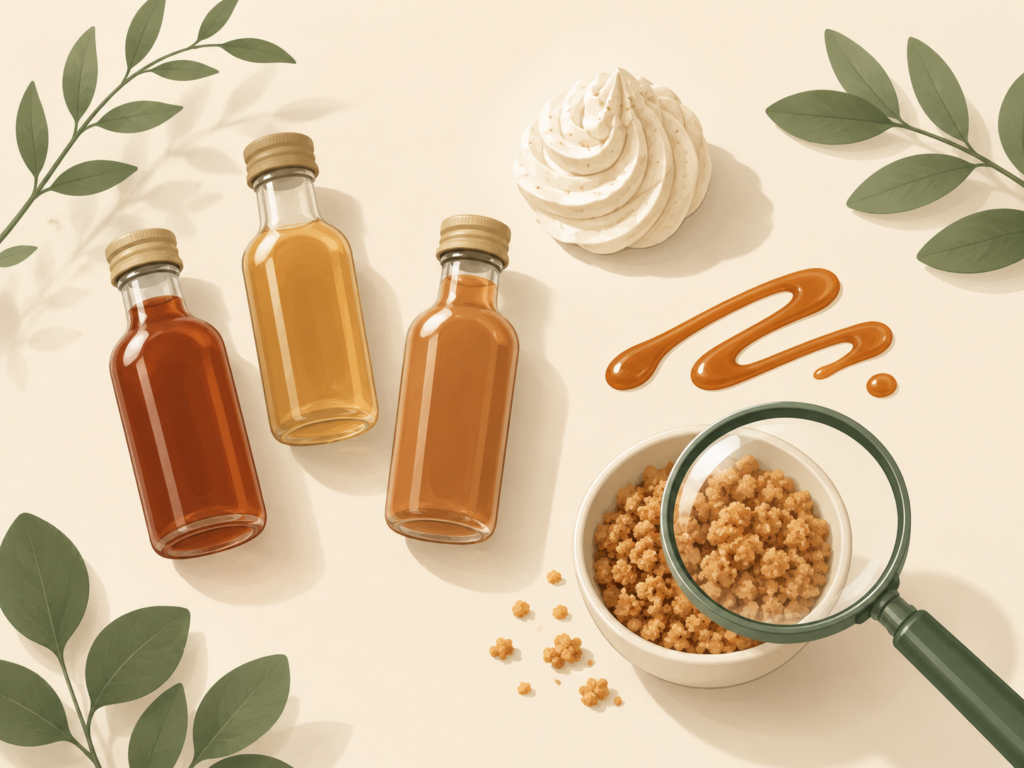
This is one of the most overlooked areas for anyone eating gluten-free at Starbucks, because the base drink can be fine while an add-in changes the picture entirely.
| Add-In Category | What to Check | Why It Matters |
|---|---|---|
| Syrups | Current ingredient list for that specific flavor | Standard syrups vary from seasonal ones, and formulations can change |
| Sauces | Allergen information for that sauce | Sauces (like mocha or caramel drizzle) often have more complex ingredient lists than syrups |
| Toppings/inclusions | Ingredients of the specific topping | Cookie crumble and similar toppings are a known source of wheat in certain Frappuccinos |
| Cold foam | All components of that specific cold foam | Flavored cold foams can include multiple ingredients beyond plain dairy |
| Drizzles | Ingredients of the drizzle itself | Drizzles are a separate product from the base sauce and need their own check |
A useful mental model: every additional customization is a new ingredient to verify, not an extension of whatever you already confirmed about the base drink.
Milk & Milk Alternatives
Dairy milk itself doesn’t contain gluten. Milk alternatives are more of a mixed bag, and it’s worth being specific rather than assuming an entire category is safe:
- Oat milk deserves particular attention. Some oat milk brands used by Starbucks are certified gluten-free by their manufacturer, but the specific brand can vary by location, and oats in general carry a higher cross-contamination risk during farming and processing than most other grains. If oat milk’s gluten status matters to you, ask which brand your store uses.
- Almond, soy, and coconut milk don’t inherently contain gluten as a category, but — as with everything on this list — formulations and any added ingredients should be checked rather than assumed.
It’s also worth separating two ideas that often get conflated: “dairy-free” and “gluten-free” describe completely different things. A milk alternative solves a dairy problem, not necessarily a gluten one, and vice versa.
Gluten-Free and Dairy-Free at Starbucks
If you’re managing both gluten and dairy at the same time, treat them as two separate checklists rather than one combined filter:
- Confirm the base drink doesn’t rely on gluten-containing ingredients.
- Separately confirm your milk choice fits your dairy needs.
- Check every syrup, sauce, or topping against both lists — an item can pass one filter and fail the other.
- Ask your barista to confirm both if you’re ordering something customized, rather than assuming a “dairy-free” label on a menu board also means gluten-free (it doesn’t, and the reverse isn’t true either).
A simple framework: start with a base drink you’ve already confirmed is free of gluten ingredients, then layer in a dairy-free milk, then check any remaining add-ins one at a time.
Gluten-Free and Low-Calorie Starbucks Options
Being gluten-free doesn’t automatically make a drink low in calories, sugar, or carbohydrates — those are separate nutritional questions entirely. A gluten-free-leaning Venti Frappuccino with whipped cream can carry significantly more calories and sugar than a Tall latte, regardless of gluten content.
If you’re tracking calories, sugar, carbs, protein, or fat alongside your gluten considerations, the Starbucks calorie calculator lets you build your exact order — size, milk, syrup pumps, shots, and toppings — and see the numbers update as you customize. For a broader nutritional picture that also covers caffeine and sodium, the Starbucks nutrition calculator is useful once you’re comparing a few different gluten-conscious options side by side. And because serving size changes the nutrition math regardless of ingredients, it helps to understand how Starbucks sizing works before comparing drinks directly.
How to Order Gluten-Free at Starbucks
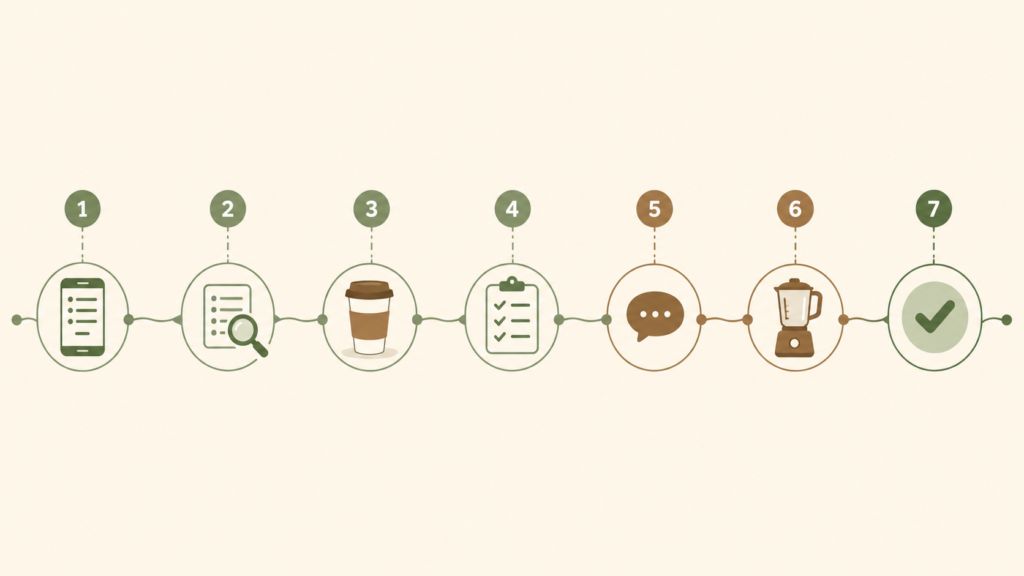
Step 1: Check the current menu
Start with what’s actually being served at your location right now rather than a list from an older article, since menus and formulations shift.
Step 2: Review ingredients and allergen information
Use the Starbucks app or website’s full ingredient list for the specific item and size you’re considering, not just a general drink category.
Step 3: Start with a simple beverage
A plain brewed coffee, Americano, or unflavored latte gives you the lowest number of variables to check compared with a heavily customized drink.
Step 4: Check every customization
Treat each syrup, sauce, milk, and topping as its own item to verify — don’t assume a “clean” base drink stays clean once you add to it.
Step 5: Tell the barista about your allergy or intolerance
Be specific about whether you’re managing a preference, a sensitivity, or celiac disease — the level of care and the request you make (like asking for cleaned equipment) should match your actual need.
Step 6: Ask about preparation and cross-contact
For anyone with celiac disease or a serious gluten-related condition, ask whether the shaker, blender, or steaming pitcher has been used for anything wheat-based recently, and whether a cleaned one is available.
Step 7: Confirm your final order
Repeat the full order back, including size and every add-in, before it’s made — it’s the simplest way to catch a mismatch before it becomes a problem.
Cross-Contact and Cross-Contamination
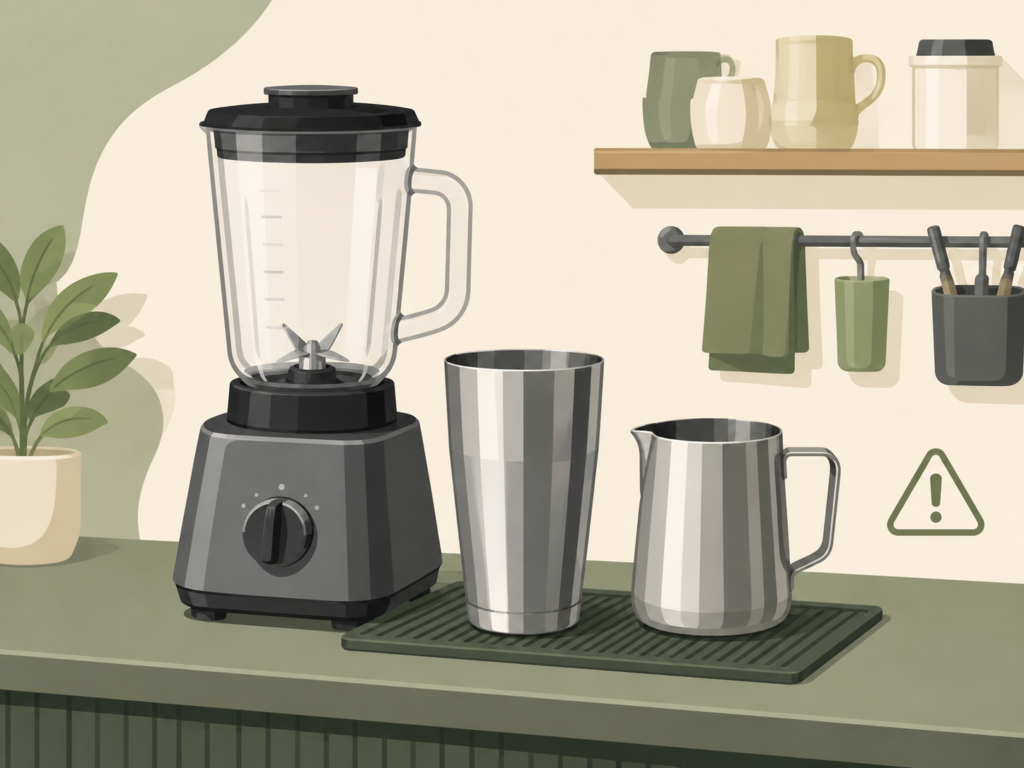
Cross-contact deserves its own section because it’s the part of this topic that ingredient lists alone can’t answer. Starbucks locations use shared equipment across the store: blenders that make both a Frappuccino with cookie crumble and a plain coffee Frappuccino, shakers used across multiple drink types, steaming pitchers moved between orders, and prep surfaces near the bakery case.
That means a drink whose ingredients don’t include gluten can still pick up trace amounts from equipment that recently touched a wheat-containing product. Starbucks does not claim to guarantee zero cross-contact — its own allergen guidance is explicit that unpackaged items can’t be guaranteed allergen-free because of shared equipment.
For someone who simply prefers to limit gluten, this level of risk may be a non-issue. For someone managing celiac disease or a serious gluten-related medical condition, it’s a meaningful factor that should shape how — or whether — you order. Asking for freshly cleaned equipment, requesting a plain drink prepared without shared shakers, or choosing packaged items with sealed labeling are all ways to reduce (not eliminate) that risk.
Is Starbucks Safe for Celiac Disease?
This isn’t a question this guide can answer definitively for you, and it shouldn’t be answered with a blanket “yes” or “no” by anyone who isn’t your doctor. What can be said clearly: celiac disease requires a meaningfully higher standard of caution than general gluten sensitivity, because even small amounts of cross-contact can trigger a reaction.
If you have celiac disease, prioritize:
- Reviewing current official allergen information before every order, not just once
- Sticking to packaged items with clear labeling where possible
- Communicating directly with staff about your condition and asking specific questions about equipment and preparation
- Recognizing that recipes, sourcing, and even a specific oat milk brand can change between visits
- Making the final call based on your own medical guidance and risk tolerance, not a generalized list from any website — including this one
Best Simple Gluten-Free Starbucks Orders
These are starting points based on ingredients that are typically straightforward, not a guarantee for any specific store or day.
Option 1: Plain Brewed Coffee or Americano
Why it may work: No syrups, sauces, or shared blending equipment involved, and the base ingredients don’t include gluten. Check before ordering: Ask whether the pitcher used for any milk add-in has been cleaned since its last use, if that matters to you.
Option 2: Unflavored Latte or Cappuccino
Why it may work: Espresso and milk are the only two components, keeping the number of ingredients to verify low. Check before ordering: Confirm your milk choice separately if you’re also avoiding dairy, and skip flavored syrups unless you’ve checked that specific one.
Option 3: Plain Cold Brew or Iced Coffee
Why it may work: Minimal ingredients, and typically prepared with less shared equipment than blended drinks. Check before ordering: Any added sweet cream or flavoring should be checked individually.
Option 4: Brewed Hot or Iced Tea, Unflavored
Why it may work: Tea leaves don’t contain gluten, and an unflavored version avoids syrup-related questions entirely. Check before ordering: Confirm the specific tea bag’s ingredient list if you’re being especially cautious.
Customization Guide
| Customization | What Gluten-Free Customers Should Consider |
|---|---|
| Milk | Confirm your specific milk or milk alternative’s current formulation |
| Syrup | Check the ingredient list for that exact flavor before adding it |
| Sauce | Sauces often have more complex formulations than syrups — verify separately |
| Whipped cream | Check current ingredients rather than assuming it’s automatically safe |
| Cold foam | Review every component if it’s a flavored or specialty cold foam |
| Toppings | Verify ingredients individually, especially crumble or crunch-style toppings |
| Extra flavor shots | Treat as a new ingredient each time, not an extension of the base drink |
| Food pairing | Check any food item completely separately from your drink order |
Gluten-Free Starbucks vs. “Gluten-Friendly”
Some menus, articles, and even in-store signage use “gluten-friendly” as a softer, less precise term than “gluten-free.” It generally signals that an item doesn’t list gluten-containing ingredients, without implying any certification or guarantee around cross-contact. Don’t treat “gluten-friendly” as medically equivalent to a certified gluten-free claim — the distinction matters most for anyone with celiac disease, where the softer term should be read as a caution flag rather than reassurance. When in doubt, look at exactly how Starbucks itself describes a specific product in its official allergen information rather than relying on how a third-party site phrases it.
Common Gluten-Free Starbucks Mistakes to Avoid
- Assuming the coffee being gluten-free means the entire finished drink is.
- Forgetting to check syrups and sauces as separate ingredients.
- Ignoring toppings, crumbles, and drizzles.
- Assuming every milk alternative is automatically gluten-free.
- Confusing “dairy-free” with “gluten-free” — they’re unrelated claims.
- Ordering food without checking its current ingredient list.
- Overlooking cross-contact risk from shared equipment.
- Relying on an old menu screenshot or outdated blog post.
- Assuming availability and formulations are identical at every location.
- Treating a third-party list (including this one) as more authoritative than Starbucks’ current official allergen information.
What to Order: Quick Reference
| If You Want… | Consider… | Check Before Ordering |
|---|---|---|
| Simple coffee | Plain brewed coffee or Americano | Any added milk’s current formulation |
| Espresso drink | Unflavored latte or cappuccino | Milk choice and any add-ins |
| Cold drink | Plain cold brew or iced coffee | Sweet cream, syrups, or flavoring |
| Tea | Unflavored hot or iced tea | Specific tea bag ingredients |
| Snack | A packaged item labeled gluten-free | The printed label on that specific product |
Conclusion
Finding solid gluten free Starbucks choices takes more than picking “coffee” off the menu. It means checking the current ingredients and allergen information for the base drink, treating every syrup, sauce, and topping as its own decision, and understanding the real difference between an item that doesn’t list gluten ingredients and one that’s been confirmed safe against cross-contact. For casual gluten avoidance, a plain coffee, espresso drink, or tea is usually a safe, simple starting point. For celiac disease or a diagnosed condition, that same starting point is just the beginning — pair it with direct conversations with staff, current official allergen information, and your own medical guidance before you order.
Frequently Asked Questions
Is Starbucks gluten free? No location or menu is certified gluten-free. Many drinks and some food items don’t contain gluten-based ingredients, but Starbucks explicitly states it can’t guarantee any unpackaged item is allergen-free due to shared equipment.
What is gluten free at Starbucks? Plain brewed coffee, espresso drinks without flavored add-ins, cold brew, and unflavored tea typically don’t rely on gluten-containing ingredients. Some packaged snacks are also labeled gluten-free on their packaging.
What Starbucks drinks are gluten free? Unflavored brewed coffee, Americanos, lattes, cappuccinos, cold brew, and plain tea are generally the safest starting points, since they avoid the syrups, sauces, and toppings most likely to introduce gluten.
Does Starbucks have gluten-free food? Some packaged snacks carry a gluten-free label, and a few egg bite varieties don’t rely on wheat-based ingredients. Most bakery items and sandwiches contain wheat and should be assumed unsuitable.
Is Starbucks coffee gluten free? Plain brewed and espresso-based coffee don’t contain gluten ingredients as formulated. Cross-contact from shared equipment is still possible, which matters more for people with celiac disease than for general gluten avoidance.
Is Starbucks cold brew gluten free? Plain cold brew doesn’t rely on gluten-containing ingredients. Any added sweet cream or flavoring should be checked separately before assuming the finished drink is gluten-free.
Are Starbucks lattes gluten free? An unflavored latte, built from espresso and milk, typically doesn’t contain gluten ingredients. A flavored latte depends on the specific syrup used, which should be checked independently.
Is Starbucks oat milk gluten free? Some oat milk brands Starbucks uses are certified gluten-free by their manufacturer, but the brand can vary by location, and oats generally carry a higher cross-contamination risk than other grains. Ask which brand your store currently uses if this matters to you.
Are Starbucks syrups gluten free? Many standard syrups don’t list gluten ingredients, but formulations vary by flavor and can change, particularly with seasonal syrups. Check the current ingredient list for the specific flavor you want.
Does Starbucks have gluten-free breakfast? Traditional breakfast sandwiches are not gluten-free because of their bread base. Some egg bite varieties are a more promising option, though ingredients vary by flavor, so check the current list before ordering.
Can people with celiac disease drink Starbucks? Many people with celiac disease do order at Starbucks, but it requires more caution than general gluten avoidance — checking current allergen information, communicating directly with staff, and understanding that cross-contact can’t be fully ruled out. This decision should be guided by your own medical advice.
How do I order gluten free at Starbucks? Start with a simple, unflavored drink, check ingredients for every customization you add, tell the barista about your dietary needs, and ask about preparation and equipment if cross-contact is a concern.
Does Starbucks have gluten-free snacks? Yes — some packaged snacks and bars carry a gluten-free label directly on the packaging, which you can verify yourself rather than relying on staff knowledge.
Is dairy-free the same as gluten-free? No. They’re separate dietary categories that happen to get grouped together often. A dairy-free milk alternative doesn’t guarantee gluten-free status, and a gluten-free item isn’t automatically dairy-free.
Can Starbucks drinks have cross-contact with gluten? Yes. Shared blenders, shakers, steaming pitchers, and prep surfaces mean a drink without gluten ingredients can still pick up trace amounts from equipment used for other products.