Calories in Oatmeal Starbucks: Complete Nutrition Guide
Last Updated: September, 2026 · By BrewTrack Utility Editorial Team
Calories in oatmeal Starbucks can vary depending on what you add, but Starbucks’ standard Rolled & Steel-Cut Oatmeal contains 160 calories per 42 g serving before any optional toppings. It provides 5 g protein, 28 g carbohydrates, 4 g fiber, 2.5 g total fat, and 0 g sugar in the base recipe. Toppings like brown sugar, dried fruit, or nuts will change the final total, so it’s worth knowing the base numbers before you customize your order.
Quick Answer
Starbucks Rolled & Steel-Cut Oatmeal contains 160 calories per 42 g serving before optional toppings. It provides 5 g protein, 28 g carbohydrates, 4 g fiber, 2.5 g fat, 125 mg sodium, and 0 g sugar.
How Many Calories Are in Starbucks Oatmeal?
Starbucks Rolled & Steel-Cut Oatmeal contains 160 calories per 42 g serving before optional toppings. It provides 5 g protein, 28 g carbohydrates, 4 g fiber, and 2.5 g fat.
This figure reflects the plain oatmeal base as Starbucks prepares it with water, before any toppings are added. The 42 g serving size refers to the dry oatmeal blend used to make the cup, not the finished weight after water is added. If you order it plain, with no toppings at all, 160 calories is the number that applies to your cup.
Once you start adding toppings — brown sugar, nut medley, dried fruit, or agave — the total calorie count for your order will be higher than 160. The oatmeal base and the finished, customized order are two different things, and it’s useful to keep that distinction in mind when you’re tracking calories.
Starbucks Oatmeal Nutrition Facts
Here is the full nutrition breakdown for the standard oatmeal base, according to Starbucks’ published nutrition information:
| Nutrient | Amount |
|---|---|
| Calories | 160 |
| Serving size | 42 g |
| Protein | 5 g |
| Carbohydrates | 28 g |
| Dietary fiber | 4 g |
| Total fat | 2.5 g |
| Saturated fat | 0.5 g |
| Trans fat | 0 g |
| Sugar | 0 g |
| Sodium | 125 mg |
| Cholesterol | 0 mg |
A few things stand out in this table. The oatmeal base has no sugar at all, which is a notable difference from many packaged instant oatmeal products that include added sweeteners. It also contains a meaningful amount of fiber (4 g) and protein (5 g) relative to its calorie count, which is part of why oatmeal is often chosen as a breakfast option. The fat content is modest and mostly unsaturated, coming from the oats themselves.
These figures apply to the oatmeal exactly as Starbucks lists it in its standard nutrition information — not to a customized cup with toppings added.
Calories in Starbucks Oatmeal Without Toppings
If you’re specifically looking for Starbucks oatmeal calories without toppings, the answer is straightforward:
- 160 calories
- 42 g serving size
- 0 g sugar
- 5 g protein, 28 g carbohydrates, 4 g fiber, 2.5 g fat
This is the number you’ll get by ordering the oatmeal plain, with no add-ins. It’s a useful baseline if you’re counting calories closely, since it lets you calculate exactly how much any topping you choose adds to your total.
Many people assume “Starbucks oatmeal” always comes with toppings included, but the base product is designed to be customizable — you can order it completely plain, partially topped, or fully loaded with all the available mix-ins. Knowing the plain-oatmeal number first makes it much easier to estimate your final total once you start adding extras.
What Is Starbucks Rolled & Steel-Cut Oatmeal?
Starbucks’ oatmeal product is officially listed as Rolled & Steel-Cut Oatmeal, a blend of two types of whole-grain oats:
- Rolled oats are oat groats that have been steamed and flattened into flakes. They cook relatively quickly and give oatmeal a softer, more familiar texture.
- Steel-cut oats are oat groats that have been chopped into smaller pieces rather than flattened. They have a chewier bite and a slightly nuttier flavor than rolled oats.
Starbucks combines both types, along with whole-grain oat flour, and prepares the oatmeal with water. The result is a whole-grain oatmeal base with a texture that draws on both types of oats — the softness of rolled oats and the heartier bite of steel-cut oats.
Because the oatmeal is prepared with water rather than milk or cream, the base recipe stays free of added sugar and keeps the fat content low. This is also why the nutrition profile (0 g sugar, 2.5 g fat) looks different from oatmeal made with dairy or pre-sweetened instant packets.
Starbucks Oatmeal Ingredients
According to Starbucks’ published ingredient information, the oatmeal base is built around whole-grain oats prepared with water. In simple terms, the product is made from:
- Whole-grain rolled oats
- Whole-grain steel-cut oats
- Whole-grain oat flour
- Water (used in preparation)
The oatmeal itself does not include added sugar, dairy, or artificial sweeteners in the base recipe — those elements only enter the picture if you choose optional toppings like brown sugar or agave. Because ingredient lists and sourcing can be updated by Starbucks over time, it’s worth checking Starbucks’ current nutrition and allergen information directly if you have a specific ingredient concern, such as a food allergy or sensitivity.
Starbucks Oatmeal Toppings and Calories
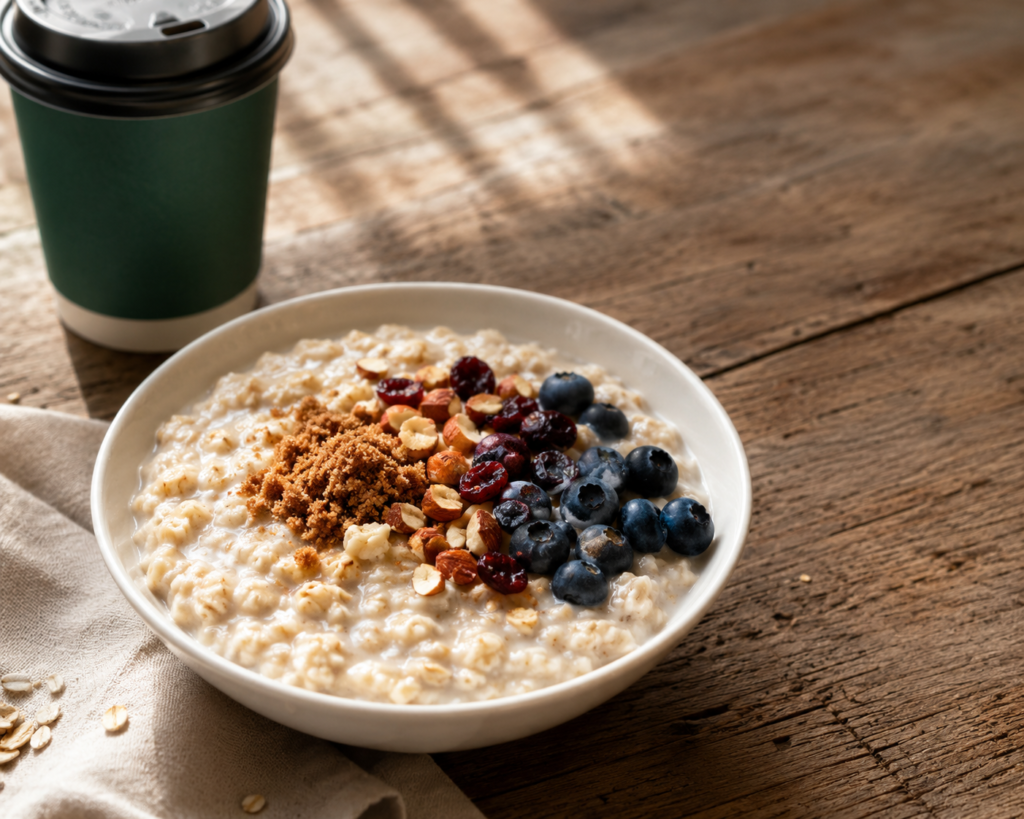
One of the defining features of Starbucks oatmeal is that it’s designed to be customized. Depending on location and availability, Starbucks has offered toppings that may include:
- Dried fruit
- Nut medley
- Brown sugar
- Agave
- Blueberries
Each of these toppings changes the nutrition profile of your final order in a different way, but Starbucks does not publish a single universal calorie value for “oatmeal with toppings” — because the total depends entirely on which toppings you choose and how much you use. Rather than inventing specific numbers for each topping, the most accurate approach is to check Starbucks’ current nutrition information or use a nutrition calculator when you want an exact total for your specific order.
That said, here’s a general, qualitative picture of how different topping categories tend to affect the nutrition profile:
| Topping type | Typical effect on nutrition |
|---|---|
| Nut medley | Tends to increase calories and fat (mostly unsaturated fat), while adding some protein |
| Dried fruit | Tends to increase carbohydrates and natural sugar |
| Brown sugar | Tends to increase carbohydrates and added sugar |
| Agave | Tends to increase carbohydrates and added sugar |
| Blueberries (fresh) | Tends to add a small amount of carbohydrates and natural sugar, with relatively little calorie impact |
In general, nuts add more to the fat and calorie side, while sweeteners and dried fruit add more to the carbohydrate and sugar side. If you’re trying to manage total calories, sugar, or carbs, it helps to think about which of those you’re prioritizing before choosing your toppings. For an exact total that reflects your specific combination, use a Starbucks calorie counter to estimate calories as you change ingredients and toppings.
How to Order Lower-Calorie Starbucks Oatmeal
If your goal is to keep your oatmeal order on the lower end of the calorie range, a few practical strategies can help:
- Start with the plain oatmeal base. At 160 calories, the unsweetened oatmeal itself is a relatively modest breakfast option — build up from there rather than starting with a fully loaded cup.
- Be selective with sweet toppings. Brown sugar and agave add carbohydrates and sugar without adding fiber or protein, so using less (or skipping them) has a meaningful impact on the total.
- Use fruit for natural flavor. Fresh fruit like blueberries can add flavor and some natural sweetness with a smaller calorie impact than syrups or sugar.
- Be mindful of nut portions. Nuts are nutrient-dense and add protein and healthy fats, but they’re also calorie-dense, so a smaller portion goes a long way if calories are a priority.
- Skip toppings you don’t need. If you already enjoy the taste of plain oatmeal, there’s no nutritional requirement to add extras — the base itself is a complete, fiber-rich option on its own.
- Check the final nutrition information for your specific order. Since toppings are added individually, checking a nutrition calculator for your exact combination gives you a more accurate total than estimating.
None of this means any single topping is “bad” — it simply means each one changes the nutrition profile in a specific, predictable direction, and you can choose your combination based on what matters most to you.
Is Starbucks Oatmeal Healthy?
Whether Starbucks oatmeal fits a healthy eating pattern depends on the rest of your diet and your individual nutrition needs, but a few facts about the base product are worth highlighting:
- It’s made from whole-grain oats, which are a source of complex carbohydrates and fiber.
- It contains 4 g of fiber per serving, which is a meaningful amount for a single breakfast item.
- It provides 5 g of protein, more than many plain breakfast pastries or sugary cereals.
- The base recipe has 0 g of sugar, since it’s prepared with water rather than sweetened liquid.
- At 160 calories, the plain oatmeal is relatively modest compared with many other breakfast options.
At the same time, it’s worth being cautious about how you interpret this. Oatmeal isn’t a “superfood” that produces guaranteed health outcomes on its own, and adding sweet toppings like brown sugar or agave will shift the nutrition profile away from the plain base numbers. Whether Starbucks oatmeal is a good fit for you depends on your overall calorie needs, dietary goals, and what else you’re eating that day — not on the oatmeal in isolation.
Is Starbucks Oatmeal Good for Weight Management?
Objectively looking at the numbers: 160 calories for the plain oatmeal base is relatively modest as a breakfast item, and the combination of 4 g fiber and 5 g protein can contribute to feelings of fullness compared with lower-fiber, lower-protein breakfast options of similar calorie counts.
That said, a few points matter for anyone specifically thinking about weight management:
- Toppings can substantially change the total. A cup of oatmeal loaded with brown sugar, dried fruit, and a full portion of nuts can end up with meaningfully more calories than the plain base.
- Overall daily intake matters more than any single food. Weight management is generally driven by total calorie intake and eating patterns over time, not by any one breakfast choice.
- Fiber and protein can support satiety, but individual responses vary from person to person.
Starbucks oatmeal can be part of a calorie-conscious breakfast when ordered simply, but it isn’t a guaranteed weight-loss food, and no single menu item should be treated as one.
Starbucks Oatmeal vs Other Starbucks Breakfast Options
Comparing oatmeal with other Starbucks breakfast items can help put its nutrition profile in context. Below is a comparison using currently available nutrition figures for the plain oatmeal base against Starbucks’ own published range for common breakfast categories.
| Starbucks breakfast item | Calories | Protein | Fiber | Key consideration |
|---|---|---|---|---|
| Rolled & Steel-Cut Oatmeal (plain) | 160 | 5 g | 4 g | No sugar in base; total changes with toppings |
| Classic oatmeal with full toppings | Higher than 160 (varies by toppings) | Varies | Varies | Best checked with a nutrition calculator for your exact order |
| Egg-based breakfast sandwiches | Generally higher in calories and protein, lower in fiber, than plain oatmeal | Higher protein | Lower fiber | Good option if prioritizing protein over fiber |
| Bakery pastries (muffins, scones) | Generally higher in calories and sugar than plain oatmeal | Lower protein | Lower fiber | Typically higher in added sugar |
For exact current calorie, protein, and fiber values for specific sandwiches or pastries, check Starbucks’ published nutrition information, since menu items and recipes are updated periodically.
The main takeaway is that plain oatmeal tends to sit on the lower-calorie, higher-fiber end of Starbucks’ breakfast lineup, while offering less protein than egg-based sandwiches and less sugar than most bakery items. Which option is “better” really depends on what you’re prioritizing — protein, fiber, sugar, or total calories — rather than any single item being universally best.
If you’re pairing your oatmeal with a drink, it’s also worth checking the calories in your beverage. For example, see our guide to Starbucks Iced Caffè Latte calories, or check our full Starbucks iced latte nutrition breakdown if you’re building out a full breakfast order.
Calculate Calories for Your Customized Starbucks Order
The nutrition figures published by Starbucks reflect standard recipes — the plain oatmeal base, prepared exactly as listed. Once you start customizing your order with specific toppings, portions, or substitutions, the actual nutrition of your cup can differ from the base numbers.
If you’re building a customized order and want a closer estimate of the total, use our Starbucks calorie counter to estimate calories as you change ingredients and toppings. For a broader nutrition breakdown that includes protein, carbs, fat, sugar, caffeine, and sodium, our Starbucks nutrition calculator can help you compare different combinations side by side.
These tools are designed to help you estimate totals for different combinations — they’re a helpful planning resource, but they won’t perfectly reproduce every possible in-store customization, since actual preparation can vary slightly by location.
Frequently Asked Questions
How many calories are in Starbucks oatmeal?
Starbucks Rolled & Steel-Cut Oatmeal contains 160 calories per 42 g serving in its plain form, before any toppings. This figure comes from Starbucks’ published nutrition information and reflects the oatmeal prepared with water, without any add-ins.
How many calories are in Starbucks oatmeal without toppings?
Without any toppings, Starbucks oatmeal has 160 calories per 42 g serving. This is the base recipe number, and it also contains 5 g protein, 28 g carbs, 4 g fiber, 2.5 g fat, and 0 g sugar.
Is Starbucks oatmeal 160 calories?
Yes, the plain oatmeal base is 160 calories per 42 g serving. If you add toppings like brown sugar, nuts, or dried fruit, the total for your finished order will be higher than 160 calories.
How much protein is in Starbucks oatmeal?
The plain oatmeal base contains 5 g of protein per 42 g serving. Adding toppings like a nut medley can increase the protein content slightly, depending on the amount used.
How many carbs are in Starbucks oatmeal?
Starbucks oatmeal contains 28 g of carbohydrates per 42 g serving in its plain form. This includes 4 g of dietary fiber. Adding sweeteners or dried fruit will increase the total carbohydrate count.
How much fiber is in Starbucks oatmeal?
The plain oatmeal base has 4 g of dietary fiber per serving, coming from the whole-grain rolled oats, steel-cut oats, and oat flour used in the recipe.
Does Starbucks oatmeal have sugar?
The plain oatmeal base has 0 g of sugar, since it’s prepared with water and no added sweeteners. Sugar is only introduced if you choose a sweet topping, such as brown sugar, agave, or dried fruit.
Is Starbucks oatmeal healthy?
Whether it fits a healthy diet depends on your individual needs, but the plain base offers whole grains, 4 g fiber, 5 g protein, and 0 g sugar at a relatively modest 160 calories. Adding sweet toppings changes this profile, so the healthiest version depends on how you customize it.
Can you customize Starbucks oatmeal?
Yes, Starbucks oatmeal is designed to be customizable. You can order it plain or add toppings such as brown sugar, dried fruit, a nut medley, agave, or blueberries, depending on availability at your location.
What toppings can you add to Starbucks oatmeal?
Common toppings associated with Starbucks oatmeal include dried fruit, a nut medley, brown sugar, agave, and blueberries. Availability can vary by store, so it’s worth checking your local menu or the Starbucks app for current options.
Is Starbucks oatmeal good for weight management?
The plain oatmeal base is relatively modest in calories (160) and provides fiber and protein that can support fullness. However, weight management depends on total daily intake and overall eating patterns, not any single food, and toppings can meaningfully raise the calorie total.
Does Starbucks oatmeal contain gluten?
Oats themselves are naturally gluten-free, but this does not automatically mean the finished product is gluten-free, since cross-contact during sourcing, preparation, or handling can occur. If you have celiac disease or a gluten sensitivity, check Starbucks’ current allergen information directly rather than assuming gluten-free status.
Final Takeaway
Starbucks’ standard Rolled & Steel-Cut Oatmeal contains 160 calories per 42 g serving, with 5 g protein, 4 g fiber, 28 g carbohydrates, 2.5 g fat, and 0 g sugar in the plain base. Toppings and customizations — like brown sugar, dried fruit, or nuts — will change these numbers, sometimes significantly, so it’s worth thinking about your final combination rather than the base figure alone.
If you’re building a customized order and want a more precise total, our Starbucks nutrition calculator can help you check calories, protein, carbs, fat, sugar, and sodium for your specific combination.
Editorial Note
Nutrition information can change when Starbucks updates recipes, ingredients, or menu items. Customized orders may also have different nutrition values than the standard listing. Check the current Starbucks menu or nutrition information when exact values matter, particularly for allergies or medical dietary needs.
Nutrition data source: Figures in this article are based primarily on Starbucks’ published U.S. nutrition information for Rolled & Steel-Cut Oatmeal. For the most current values, visit Starbucks’ official nutrition page.