Drinks at Starbucks for Pregnant Women: What to Order, What to Limit & How to Customize
Written by: The Brewtrack Editorial Team Last updated: August 2026
A note on medical advice: This article provides general educational information and isn’t a substitute for personalized medical care. Pregnancy needs vary, so talk with your obstetrician, midwife, or another qualified healthcare professional about caffeine, specific ingredients, gestational diabetes, allergies, or any other pregnancy-related concern specific to you.
Quick Answer
Yes — many drinks at Starbucks for pregnant women can fit into a typical pregnancy diet, but “fits” depends on more than the drink’s name. The main things to track are your total daily caffeine (not just what’s in one cup), the size you order, hidden caffeine sources like matcha and Refreshers that don’t taste like coffee, the ingredients in teas and add-ins, and general sugar and calorie content. No single Starbucks drink is universally “safe” for every pregnant person — individual medical circumstances, sensitivities, and conditions like gestational diabetes can change what’s appropriate. The most reliable approach is to pick a caffeine-conscious order, check current nutrition information before you buy, and loop in your healthcare provider if you have specific concerns.
What Drinks at Starbucks Can Pregnant Women Have?
Starbucks’ menu breaks down into a few broad categories worth knowing before you order:
- Decaf espresso drinks — lattes, cappuccinos, and Americanos made with decaf espresso, which carry only trace caffeine.
- Milk-based drinks — steamers and milk-forward beverages that can be made without espresso at all.
- Herbal teas — naturally caffeine-free botanical blends, though “herbal” doesn’t automatically mean appropriate for every pregnant person (more on that below).
- Naturally caffeine-free beverages — hot water with lemon, steamed milk, and similar simple orders.
- Lower-caffeine options — smaller sizes, single-shot drinks, or naturally lower-caffeine categories like matcha and Refreshers.
- Occasional higher-sugar drinks — Frappuccinos and specialty beverages that can be enjoyed occasionally with attention to portion size.
Caffeine-free and low-caffeine are not the same thing, and mixing them up is one of the most common mistakes people make when ordering. Caffeine-free means the drink contains no meaningful caffeine at all — think herbal tea or steamed milk. Low-caffeine means the drink does contain caffeine, just less of it than a full-strength coffee — a single Refresher or a small matcha latte, for example. Both can work within a caffeine-conscious pregnancy diet, but only one of them contributes zero to your daily total.
How Much Caffeine Can You Have During Pregnancy?
<cite index=”18-1″>Research suggests that moderate caffeine consumption of less than 200 milligrams per day does not appear to cause miscarriage or preterm birth, according to guidance from the American College of Obstetricians and Gynecologists (ACOG).</cite> That works out to roughly one 12-ounce cup of coffee. <cite index=”14-1″>The World Health Organization takes a slightly more permissive stance, recommending pregnant women keep daily caffeine intake under 300 milligrams.</cite>
Two things make this limit trickier to apply in real life than it sounds:
- Caffeine comes from more than coffee. Tea, matcha, chocolate, some sodas, energy drinks, and even certain over-the-counter medications all contribute to your daily total. A Starbucks order is one piece of a bigger picture, not the whole picture.
- Your body processes caffeine more slowly during pregnancy. <cite index=”14-1″>The half-life of caffeine can extend well beyond what it is outside of pregnancy as the pregnancy progresses, meaning caffeine — and its effects — linger longer in your system than they used to.</cite>
That’s why the most useful habit isn’t memorizing which single drink is “the safe one” — it’s getting comfortable estimating your total daily caffeine across everything you eat and drink, then choosing your Starbucks order to fit inside whatever remains of your personal budget for the day. We walk through exactly how to do that math further down.
Starbucks Drink Caffeine Table
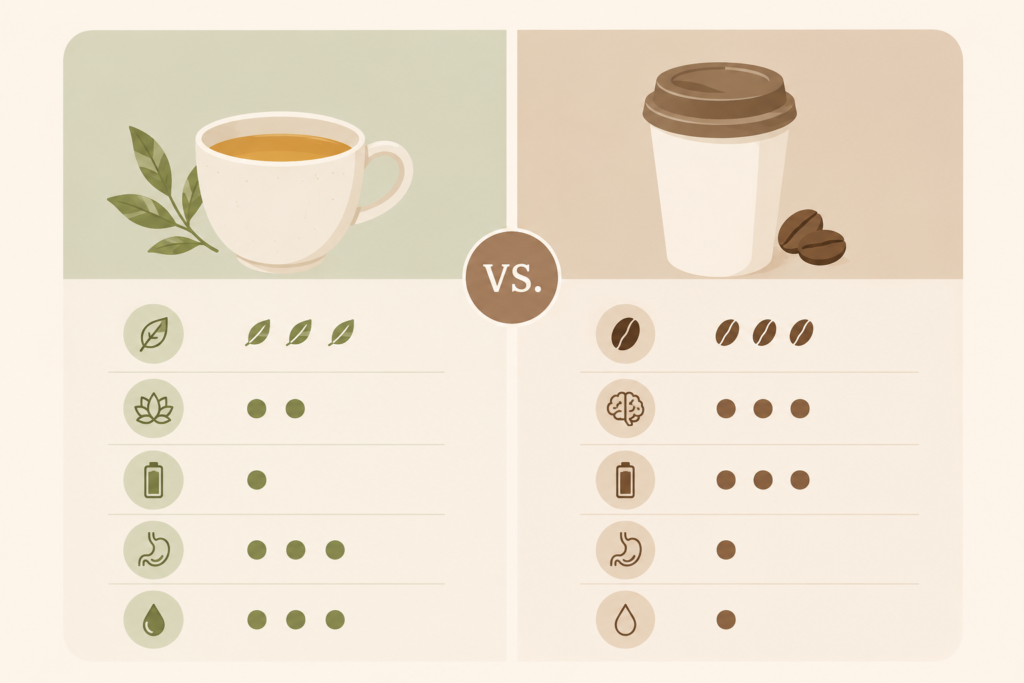
The figures below are general, commonly cited approximations for standard recipes and can shift with size, customization, and current Starbucks formulations. Always check the Starbucks app or current official nutrition information before ordering if you’re tracking closely.
| Drink/category | Typical caffeine level* | Pregnancy consideration | Customization idea |
|---|---|---|---|
| Decaf latte / cappuccino | Very low (roughly 0–15 mg) | Good option if you want the ritual with minimal caffeine | Order any size; ask for decaf espresso |
| Decaf Americano | Very low (roughly 0–15 mg) | Similar to decaf latte, without the milk/calories | Add steamed milk if you want it creamier |
| Cappuccino / Latte (regular) | Moderate; scales with shot count, not size alone | A tall/grande with the standard 1–2 shots can fit easily within a daily budget | Request fewer shots or a smaller size to lower caffeine |
| Iced latte / Iced Americano | Moderate; same shot-based logic as hot versions | Same considerations as the hot version | Ask for a single shot in a smaller size |
| Brewed coffee (Pike Place, Blonde, etc.) | Can be high, especially in larger sizes | A grande or venti brewed coffee can use up most or all of a daily caffeine budget in one cup | Order a short/tall size or switch to decaf brewed coffee |
| Cold brew / Nitro cold brew | Often higher than an equivalent size of hot brewed coffee | Easy to underestimate because it tastes smooth, not strong | Order a smaller size or ask about a half-caff option |
| Refreshers | Low to moderate (contains green coffee extract) | Fruity flavor can make the caffeine easy to forget | Choose a smaller size; ask about caffeine-free lemonade instead |
| Matcha beverages | Low to moderate, varies by size and number of scoops | Matcha is caffeinated — it should count toward your daily total | Request fewer matcha scoops or a smaller size |
| Herbal teas | Caffeine-free | Check the ingredient list for specific botanicals rather than assuming all are appropriate | Ask your barista to read the ingredient list if unsure |
| Black or green tea | Low to moderate | Steep time and size both affect the final caffeine amount | Ask for a shorter steep or a smaller size |
| Hot chocolate | Low (from cocoa, not coffee) | Generally a lower-caffeine, higher-sugar option | Ask for less mocha syrup or a smaller size |
| Crème-based Frappuccino | Typically caffeine-free unless it’s a coffee, matcha, or chai variety | Watch sugar and calories more than caffeine | Order “light” or a smaller size to reduce sugar |
| Coffee-based Frappuccino | Contains caffeine from coffee or a coffee base | Combines caffeine and higher sugar in one drink | Choose a smaller size or ask for fewer syrup pumps |
*Caffeine amounts can vary by beverage, size, recipe, customization, and current Starbucks formulation. Always check current official nutrition information before ordering.
You can also use our Starbucks nutrition calculator to check calories, sugar, and other nutrition details for your exact customized order before you buy.
Best Lower-Caffeine Starbucks Drinks During Pregnancy
None of these are universally “safe” — they’re simply drinks that tend to land on the lower end of the caffeine spectrum, which makes them easier to fit into a daily budget. Always verify current caffeine information and check ingredients against your own situation.
1. Decaf Caffè Latte Steamed milk with decaf espresso gives you the coffeehouse experience with only trace caffeine. Customize with your milk of choice; watch added syrup if you’re limiting sugar. Someone who dislikes the taste of decaf espresso may prefer a steamer instead.
2. Decaf Cappuccino Similar profile to a decaf latte but with more foam and less milk volume, which also means fewer calories from milk. Good for anyone who wants a smaller, lighter drink.
3. Steamed Milk (Steamer) Zero caffeine, fully customizable with flavor syrups. A solid pick for anyone avoiding caffeine entirely rather than just reducing it.
4. Vanilla Bean Crème Frappuccino A blended, caffeine-free option for a cold treat. It runs higher in sugar and calories, so it’s better suited to occasional ordering than a daily habit.
5. Honey Citrus Mint Tea (without the added green tea bag) Ask for this without the green tea component and it becomes essentially caffeine-free — steamed lemonade, honey, and mint. With the tea bag included (the classic “Medicine Ball” build), it carries a small amount of caffeine — see the dedicated section below.
6. Herbal Tea (any variety) Naturally caffeine-free, though ingredient lists vary by blend. Check for botanicals you’re unsure about and ask your provider if anything looks unfamiliar.
7. Single-Shot Iced or Hot Latte Asking for one shot instead of the standard two cuts caffeine roughly in half compared to the default recipe, while keeping the coffee flavor. Best for someone who wants coffee taste without a full dose.
8. Small Refresher A tall Refresher carries meaningfully less caffeine than a venti of the same drink. Good for the fruity flavor without a large caffeine load — but it isn’t caffeine-free, so it still counts toward your daily total.
9. Small Matcha Latte Matcha delivers a gentler, more sustained energy lift than coffee for many people, and a smaller size keeps the dose modest. Not appropriate to treat as caffeine-free.
10. Chai Tea Latte (smaller size) Chai contains black tea, so it’s not caffeine-free, but a tall size keeps the amount modest. Watch the added sugar from the chai concentrate.
11. Hot Chocolate Low in caffeine (it comes from cocoa, not coffee), but higher in sugar — better suited to occasional ordering, especially for anyone managing blood sugar.
12. Decaf Pike Place Roast (brewed) For people who specifically miss the taste of drip coffee rather than espresso drinks, decaf brewed coffee delivers that without a meaningful caffeine load.
Starbucks Drinks That Can Be Surprisingly High in Caffeine
This is where a lot of well-intentioned orders go sideways — not because someone chose an obviously caffeinated drink, but because they assumed a drink was mild when it wasn’t.
Taste is not a reliable indicator of caffeine content. A smooth, mellow cold brew can carry more caffeine than a bold-tasting espresso shot, simply because of how much liquid you’re drinking and how it’s brewed. A few categories worth extra attention:
- Brewed coffee, especially in grande and venti sizes, tends to carry more total caffeine than an equivalent size of an espresso drink, because it’s steeped in larger volumes rather than pulled as concentrated shots.
- Cold brew and nitro cold brew are steeped for many hours, which pulls more caffeine into the final drink even though the taste is smooth rather than sharp.
- Large iced espresso beverages scale caffeine with shot count, and bigger sizes at Starbucks often default to more shots — always check how many shots come standard in your size before assuming it matches a smaller version you’ve had before.
- Caffeinated Refreshers taste like fruit juice, which makes it easy to forget they contain green coffee extract. They are not the caffeine-free option they can appear to be.
- Matcha looks and tastes nothing like coffee, but matcha powder is a concentrated source of caffeine — a full-size matcha latte isn’t a “safe” caffeine-free swap for coffee.
- Tea-based drinks, including chai and some Frappuccino flavors made with a tea base, contain real caffeine even though “tea” often gets mentally filed as gentler than coffee.
The practical takeaway: don’t judge a drink’s caffeine by how it tastes, how it’s marketed, or what color it is. Check the actual ingredient and, where available, the caffeine information before you order — especially for anything unfamiliar.
Are Starbucks Refreshers Safe During Pregnancy?
Refreshers are Starbucks’ fruit-flavored, generally cold beverages built on a base that includes green coffee extract — which is where their caffeine comes from, even though they contain no brewed coffee or espresso. That’s exactly why they trip people up: the bright colors and fruity flavor profile read as a soda or juice alternative, but Refreshers are not caffeine-free.
A few things to keep in mind:
- Not all Refreshers carry identical caffeine content. Flavor and recipe changes can shift the amount, so don’t assume one Refresher’s caffeine level applies to every variety on the menu.
- Size matters as much as flavor. A trenta Refresher contains meaningfully more liquid — and more caffeine — than a tall of the same drink.
- They still count toward your daily total. If you’re also having a coffee that day, factor the Refresher in rather than treating it as a “free” caffeine-free choice.
- Check current information before ordering if you’re tracking precisely, since Starbucks periodically updates recipes and available flavors.
If you specifically want the fruity, iced experience without any caffeine, ask your barista about a caffeine-free lemonade or a fruit-flavored beverage built without the Refresher base — availability varies by location.
Is Starbucks Matcha Safe During Pregnancy?
Matcha is finely ground green tea leaf, and unlike steeped tea (where you discard the leaves), matcha means you’re consuming the entire leaf in powdered form — which is part of why it delivers more caffeine per serving than a typical cup of brewed green tea.
Key points to keep straight:
- Matcha is not caffeine-free. It should be counted the same way you’d count a coffee or tea toward your daily caffeine total, not treated as an herbal alternative.
- Matcha is different from herbal tea. The two get lumped together because they’re both “tea,” but only one is caffeine-free.
- Serving size and the number of matcha scoops both affect the total, so a smaller size or fewer scoops meaningfully reduces the caffeine you’re getting.
There isn’t strong evidence to support claims that matcha is either uniquely dangerous or uniquely beneficial during pregnancy beyond its caffeine content — the caffeine math is the relevant factor here, not anything special about matcha as an ingredient.
Is Decaf Starbucks Coffee a Good Option During Pregnancy?
Decaf can be a genuinely useful tool for reducing caffeine while keeping your usual coffeehouse order mostly intact — but “decaf” doesn’t mean “zero caffeine.”
Decaffeination processes typically remove the large majority of caffeine from coffee, not all of it, so a decaf espresso shot or cup of decaf brewed coffee still carries a small residual amount. For most people, that residual amount is low enough that several decaf drinks in a day would still land well under typical pregnancy caffeine guidance — but if you’re also drinking tea, eating chocolate, or having a caffeinated drink elsewhere in the day, it’s still worth counting decaf toward your running total rather than assuming it’s automatically zero.
Practical decaf orders to consider:
- Decaf caffè latte, any size, any milk
- Decaf cappuccino for a smaller, foam-forward drink
- Decaf Americano if you prefer a black-coffee style drink without the milk
- Decaf brewed coffee (Pike Place or similar) for a classic drip-coffee experience
Starbucks Tea During Pregnancy
Tea at Starbucks splits into two categories that deserve separate treatment.
Herbal teas
Herbal blends are naturally caffeine-free, but “herbal” is a broad category that can include a wide range of different botanicals depending on the blend — mint, chamomile, hibiscus, lemongrass, and others. Being caffeine-free doesn’t automatically mean every herbal ingredient is something you should assume is fine without a second look. If you’re unsure about a specific botanical in a blend you enjoy, check the ingredient list (your barista can pull this up) and ask your healthcare professional if anything gives you pause.
Black and green tea
These do contain caffeine, generally less than a full cup of brewed coffee but enough to matter if you’re tracking your total closely. Steep time and drink size both affect the final caffeine content — a shorter steep or a smaller size will land lower than a longer steep in a larger cup.
Neither category should be treated with a blanket “always safe” or “always avoid” label. The right move is checking ingredients for herbal blends and checking caffeine amounts for black/green tea, then deciding based on your own situation — with a healthcare professional’s input if you have a specific concern.
What About the Starbucks “Medicine Ball”?
The “Medicine Ball” is the popular nickname for a Starbucks build officially known on the menu as the Honey Citrus Mint Tea — steamed lemonade and hot water combined with Jade Citrus Mint green tea and Peach Tranquility herbal tea, sweetened with honey.
A few things worth knowing:
- It contains a small amount of caffeine, from the green tea component. It is not caffeine-free, even though half of the tea blend is herbal.
- It also contains added sugar, mainly from the lemonade base and honey.
- It is not a medical treatment. Despite the nickname and its popularity as a “sick day” order, it doesn’t cure or treat colds, flu, infections, or pregnancy-related symptoms — it’s a warm, soothing beverage, not medicine.
- If you’d prefer it fully caffeine-free, you can ask for it without the green tea bag, leaving just the herbal tea, steamed lemonade, and honey.
Anyone managing a pregnancy-related health condition — gestational diabetes, a sore throat that isn’t improving, or anything else — should get individualized guidance from their healthcare provider rather than relying on a drink, however comforting it is.
How to Customize a Starbucks Drink for Pregnancy
Customization is where you have the most control, and small changes add up:
- Choose decaf espresso where you want the flavor without the caffeine.
- Reduce espresso shots — ask for a single shot instead of the default two on a grande or venti.
- Order a smaller size — the single biggest lever for both caffeine and calories in milk-based drinks.
- Check caffeine before ordering using the Starbucks app or by asking your barista, especially for anything unfamiliar.
- Reduce syrup pumps if you’re watching sugar.
- Consider your milk choice based on your own dietary needs — dairy, oat, almond, soy, and coconut are all typically available.
- Check ingredients for allergies or intolerances, especially in syrups, sauces, and toppings.
- Don’t assume “iced,” “fruity,” or “tea” automatically means caffeine-free — verify instead of guessing.
Realistic example orders:
- Coffee flavor, low caffeine: Grande decaf latte, oat milk, one pump vanilla
- Iced and refreshing, low caffeine: Tall Refresher, light ice
- Something sweet, occasional treat: Mini or tall crème Frappuccino
- Warm and soothing, caffeine-free: Steamed lemonade with honey, no tea bag added
Starbucks Drinks for Different Pregnancy Situations
If you’re trying to keep caffeine very low: Decaf espresso drinks, herbal tea, or steamed milk are your most reliable starting points.
If you still want coffee flavor: A single-shot latte or decaf brewed coffee keeps the taste without a full caffeine dose.
If you want something iced: A smaller iced decaf latte, a tall Refresher, or iced herbal tea all work depending on how much caffeine you want.
If you’re craving something sweet: A smaller crème Frappuccino satisfies the craving with a defined, checkable calorie count rather than an unlimited pour.
If you want tea: Choose herbal for zero caffeine, or a smaller black/green tea if you’re comfortable with a modest amount.
If you’re avoiding caffeine entirely: Stick to herbal tea, steamed milk, or caffeine-free lemonade, and double-check any tea blend’s ingredient list.
If you’re watching sugar intake: Reduce syrup pumps, skip whipped cream, choose a smaller size, and lean toward espresso-based or brewed drinks over blended ones.
If you’re sensitive to caffeine: Even “low-caffeine” categories like matcha and Refreshers may feel noticeable — a smaller size or a fully caffeine-free option may suit you better.
If coffee makes pregnancy nausea or heartburn worse: Many people find acidic, strong coffee harder to tolerate during pregnancy regardless of caffeine content; a milder tea, steamer, or diluted drink may sit better. This is a comfort consideration, not a substitute for medical advice if symptoms are significant or persistent.
Pregnancy and Starbucks Sugar, Calories & Nutrition
“Pregnancy-friendly” and “nutritionally ideal” aren’t the same thing, and it’s worth separating the two when you’re deciding what to order.
Beyond caffeine, the biggest variables in a Starbucks order are:
- Calories, which can range from single digits (black coffee) to several hundred (a fully loaded Frappuccino).
- Added sugar, largely from flavored syrups, sweetened sauces, and blended drink bases.
- Whipped cream and toppings, which add calories and sugar without adding nutritional value.
- Milk choice, since dairy and plant-based milks differ in calories, protein, and sugar.
- Portion size, which scales nearly everything above it.
None of this means sugar needs to be treated as something to eliminate — an occasional sweeter drink is not inherently a problem for most pregnancies. It’s about making an informed choice rather than an accidental one. If you have gestational diabetes or another condition that requires individualized dietary guidance, follow your healthcare professional’s specific recommendations rather than general tips like these.
If you want the exact numbers for your usual order — or want to compare a few customizations before you commit — our Starbucks calorie calculator lets you build the drink exactly as you’d order it and see calories, sugar, protein, carbs, and fat update instantly. For a fuller nutrition picture including caffeine and sodium, the Starbucks nutrition calculator covers the same ground with more detail.
How to Calculate Your Total Caffeine for the Day
The formula is simple, even if tracking it takes a little intention:
Daily caffeine = Starbucks drink(s) + tea + chocolate + soft drinks + any other caffeinated products
A few realistic examples of how this adds up:
Example 1 — Coffee in the morning only
- Grande decaf latte at breakfast (very low caffeine)
- No other caffeinated items that day
- Total: comfortably low, with plenty of room if something else comes up later
Example 2 — Coffee plus afternoon tea
- Tall single-shot latte in the morning (moderate caffeine)
- One cup of black tea in the afternoon (low-to-moderate caffeine)
- Total: likely moderate — worth checking against your personal daily limit, especially if you’re also having chocolate or soda that day
Example 3 — Refresher plus chocolate
- Tall Refresher at lunch (low-to-moderate caffeine)
- A couple of pieces of dark chocolate in the evening (small but real caffeine contribution)
- Total: modest, but a reminder that “non-coffee” caffeine sources still count
Example 4 — Full-size brewed coffee
- Grande brewed coffee in the morning (can be a substantial portion of a typical daily budget on its own)
- Anything caffeinated later in the day pushes the total higher quickly
- Total: worth being deliberate about — this is the scenario where checking your running total matters most
These examples are illustrative, not prescriptive — they’re meant to show how to think about stacking caffeine sources across a day, not to set a specific target for you. Your own appropriate daily limit is something to confirm with your healthcare provider.
Quick Starbucks Pregnancy Ordering Cheat Sheet
| If you want… | Consider… | Main thing to check |
|---|---|---|
| Coffee flavor | Decaf espresso drink | Residual caffeine |
| Something iced | Lower-caffeine iced option | Caffeine |
| Tea | Appropriate tea option | Ingredients + caffeine |
| Something sweet | Smaller flavored drink | Sugar + calories |
| No caffeine | Caffeine-free option | Ingredients |
| Less sugar | Customize syrups/toppings | Added sugar |
Frequently Asked Questions
Can pregnant women drink Starbucks? Yes, for many people Starbucks can fit into a pregnancy-friendly routine. The key is paying attention to total daily caffeine, drink size, and ingredients rather than assuming every drink is automatically fine.
What are the best drinks at Starbucks for pregnant women? There’s no single “best” drink — it depends on whether you’re prioritizing low caffeine, zero caffeine, coffee flavor, or a lighter treat. Decaf espresso drinks, herbal tea, and smaller lower-caffeine options are common go-tos.
What Starbucks drinks have the least caffeine? Decaf espresso drinks and herbal teas sit at the low end, alongside steamed milk, which has none at all. Even decaf carries a small residual amount rather than being completely caffeine-free.
Can I drink a Starbucks latte while pregnant? A regular latte contains caffeine from its espresso shots, so it can fit within a daily budget for many people — just track it as part of your total, and consider a smaller size or fewer shots if you want to reduce it.
Is decaf Starbucks coffee safe during pregnancy? Decaf is generally a lower-caffeine choice, though it isn’t completely caffeine-free. For most people, moderate decaf consumption fits easily within typical daily caffeine guidance.
Can I drink Starbucks Refreshers while pregnant? Refreshers contain caffeine from green coffee extract, so they aren’t a caffeine-free choice even though they taste fruity. A smaller size keeps the amount modest, and it should still count toward your daily total.
Does Starbucks matcha contain caffeine? Yes. Matcha is a concentrated source of caffeine and should be counted the same way you’d count coffee or tea, not treated as an herbal or caffeine-free alternative.
Can I drink Starbucks tea while pregnant? Herbal teas are caffeine-free but should be checked for specific ingredients you may want to avoid. Black and green teas do contain caffeine, generally less than coffee but still worth tracking.
Is Starbucks cold brew safe during pregnancy? Cold brew often carries more caffeine than an equivalent size of hot brewed coffee because of its long steep time, so it’s worth treating as a higher-caffeine choice rather than a mild one.
How much caffeine can I have while pregnant? <cite index=”18-1″>Guidance from ACOG suggests keeping caffeine under 200 milligrams a day, roughly the amount in one 12-ounce cup of coffee.</cite> Individual circumstances can change what’s appropriate, so check with your healthcare provider for personalized guidance.
Does decaf coffee contain caffeine? Yes, in small amounts. Decaffeination removes the large majority of caffeine but not all of it, so decaf still makes a small contribution to your daily total.
Is the Starbucks Pink Drink caffeinated? It’s built on the Strawberry Açaí Refreshers base, which contains green coffee extract, so yes — it carries a modest amount of caffeine rather than being caffeine-free.
Is the Starbucks Medicine Ball safe during pregnancy? The classic build contains a small amount of caffeine from its green tea component and some added sugar from honey and lemonade. It’s not a medical treatment, and it can be ordered without the green tea bag if you want it fully caffeine-free.
Which Starbucks drinks are caffeine-free? Herbal teas, steamed milk, and most crème-based Frappuccinos (excluding matcha and chai varieties) are typically caffeine-free — always confirm current ingredients if you’re ordering something unfamiliar.
How can I order a lower-caffeine Starbucks drink? Choose decaf espresso, request fewer shots, pick a smaller size, or lean toward naturally lower-caffeine categories like herbal tea — and check current caffeine information before you order if you’re tracking closely.
Sources & References
- American College of Obstetricians and Gynecologists (ACOG) — Moderate Caffeine Consumption During Pregnancy
- American College of Obstetricians and Gynecologists (ACOG) — How much coffee can I drink while I’m pregnant?
- World Health Organization caffeine guidance during pregnancy, as summarized in peer-reviewed literature (PMC)
- Starbucks — official Starbucks nutrition and caffeine information
Note: Because Starbucks periodically updates recipes, sizes, and nutrition data, verify current figures directly through the Starbucks app or website before making decisions based on specific numbers.